Wind vs. Hail: How Each Type of Storm Damages Your Roof
After a strong storm passes through Central Texas, many homeowners look up at their roof and wonder what kind of damage might be hiding up there. Wind and hail are two of the most common culprits, but they affect roofing materials in very different ways. Understanding the difference can help you know what to look for, what to tell your insurance adjuster, and when to call a local roofing company for a closer look. This article breaks down the distinct signs of wind damage versus hail damage, explains how each type of storm affects different roofing materials, and offers practical advice for getting a thorough assessment.
How Wind Damages a Roof
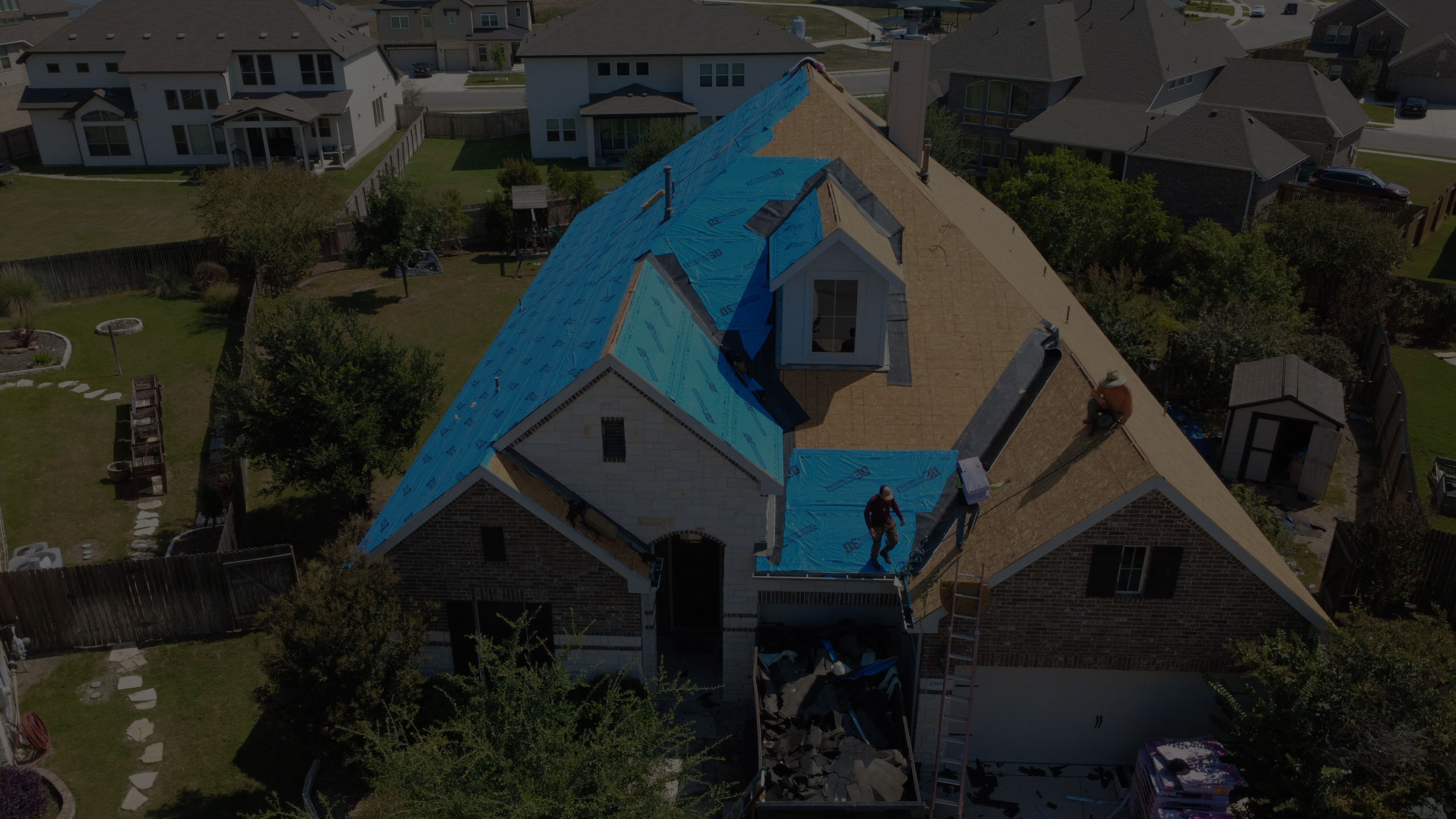
Wind damage is often less obvious at first glance than hail damage, but it can be just as serious. High winds create uplift forces that pull on the edges of shingles and flashing. Over time, or during a single severe storm, these forces can loosen or remove individual shingles, tear away sections of underlayment, and even lift entire sections of roof decking if the wind gets underneath. The most vulnerable areas are the edges, ridges, and valleys where the wind can catch and pry.
One of the first signs of wind damage is missing shingles. You might spot a bare spot on the roof from the ground, or find a shingle in the yard after the wind dies down. But the damage does not stop there. Wind can also cause shingles to curl or crack at the edges, loosen the seal around roof flashing, and allow water to seep into the gaps. Even if a shingle stays in place, the nails may have been partially pulled out, making the roof less secure for the next storm.
Wind uplift is especially problematic on roofs with a steep pitch or large overhangs. The pressure difference between the inside of the attic and the outside air can literally pull shingles upward. This is why you sometimes see entire sections of shingles missing in a neat pattern, rather than random individual losses. If the wind is strong enough, it can also damage the roof decking itself, causing warping or separation that requires more than just replacing a few shingles.
Another hidden consequence of wind damage is water intrusion. Once the protective layer of shingles is compromised, rain can enter the gaps and soak the underlayment. Over time, this leads to rot, mold, and interior leaks that may not show up until weeks after the storm. That is why a prompt inspection after high winds is important, even if you do not see obvious damage from the ground.
How Hail Damages a Roof
Hail damage is usually easier to spot because it leaves visible marks. Hailstones vary in size from small pellets to golf balls or larger, and their impact can bruise, crack, or puncture shingles. The damage depends on the size and density of the hailstones, the angle at which they hit, and the age and type of roofing material.
On asphalt shingles, hail often causes granule loss. The protective layer of mineral granules gets knocked off by the impact, leaving bare spots that look darker and feel rough. Over time, those bare spots lose their weather resistance and begin to degrade faster. If the hailstones are large enough, they can also crack or break the shingle itself. Cracks may be small and hairline at first, but they widen with temperature changes and eventually allow water to seep in.
On metal roofs, hail can create dents that are mostly cosmetic but can also stress the metal around fasteners. On tile or slate roofs, hailstones may chip or crack individual tiles. In all cases, the damage is localized to the impact points, which means a hail-damaged roof often has a pattern of scattered hits rather than the continuous sections affected by wind. However, if the hail is accompanied by high winds, the two can combine to create even more complex damage patterns.
Key Differences in Signs and Severity
The most straightforward way to tell wind damage from hail damage is by looking at the pattern. Wind damage tends to affect edges, ridges, and entire sections of shingles. You may see missing shingles in a line along the ridge, or a whole section of shingles lifted near the eaves. Hail damage, by contrast, appears as scattered dents, bruises, or cracks across the roof surface. If you see a mix of both patterns, you probably experienced a storm with both high winds and hail.
Regenesis Roofing & Restoration LLC is also on Facebook.
Another difference is the type of injury to the shingle itself. Wind damage often pulls shingles loose from their nails without necessarily breaking them. Hail damage bruises or cracks the shingle without pulling it out of place. Both types of damage can lead to water intrusion, but through different mechanisms: wind damage creates gaps at the edges, while hail damage creates punctures or cracks on the shingle surface.
The severity of the damage also varies. A few missing shingles after a windstorm may be a quick fix, but widespread uplift or decking damage can be a major repair. Hail damage that is limited to granule loss or small cracks may not be urgent, but it reduces the roof’s lifespan and may warrant replacement if the damage is widespread. In both cases, the earlier the damage is addressed, the less chance for secondary issues like rot or interior leaks.

What to Do After a Storm
After any severe storm, it is wise to do a visual check from the ground. Look for missing shingles, dents, or debris on the roof. Check the gutters for granules or broken pieces. Inside the attic, look for water stains or light coming through the sheathing. If you see any signs of damage, the next step is to contact a roofing company for a professional inspection.
A thorough inspection goes beyond what you can see from the ground. The inspector will check the roof decking, underlayment, flashing, and the condition of individual shingles. They will also look for signs of wind uplift that may not be visible from below. For hail damage, they will assess the extent of granule loss and cracking, and determine whether the shingles still have enough life left to protect the home.
Knowing the difference between wind and hail damage matters for insurance claims as well. Many policies have different deductibles for wind and hail, and the adjuster will need to identify the primary cause of the damage. A clear understanding of what happened can help you communicate with your insurance company and ensure that the claim is handled correctly. If you are unsure, a professional inspection report can provide the documentation needed to support the claim.
In some cases, the damage may not be obvious until weeks later. That is why scheduling a free roof inspection after a storm season is a smart move, even if you do not see anything alarming. A trained eye can spot subtle signs of wind uplift or hail bruising that an untrained homeowner might miss. Catching small problems early prevents them from turning into expensive repairs later.
When to Consider Replacement
Not every storm requires a full roof replacement. Isolated damage from wind or hail can often be repaired by replacing a few shingles or patching a small area. However, if the damage is widespread, or if the roof is already near the end of its service life, replacement may be more cost-effective than repeated repairs. A professional inspector can help you weigh the options based on the age and condition of your roof, the extent of the damage, and local building codes.
For wind damage, the deciding factor is often the condition of the roof decking. If the wind has lifted and warped the sheathing, simply replacing shingles on top may not be enough. For hail damage, the key question is how much granule loss or cracking has occurred. If most of the shingles on the roof show significant bruising or granule loss, the roof’s ability to shed water and resist UV rays is compromised, and replacement is usually the better choice.
Protecting Your Roof from Future Storms
While you cannot control the weather, you can take steps to make your roof more resilient. Proper installation, good ventilation, and regular maintenance all help. For wind resistance, ensure that shingles are properly nailed and that flashing is securely fastened. For hail resistance, consider impact-resistant materials if you live in a hail-prone area. But the single most important step is regular inspection after storms, so that any damage is caught and repaired before it leads to bigger problems.
Regenesis Roofing & Restoration LLC, based at 2302 John Tee Dr, Cedar Park, TX 78613, USA, and reachable at +1 512-674-5979, is a local roofing contractor providing roof inspections, repairs, replacements, hail damage restoration, and storm-related roofing services in Cedar Park, Leander, and nearby North Austin communities.